How to Clean and Maintain PTFE Non-Stick Baking Pans: A Professional Care Guide
Contents
- 1. Allow the Baking Pan to Cool Before Cleaning
- 2. Wash with Warm Water and Mild Detergent
- 3. Never Use Steel Wool or Abrasive Scouring Pads
- 4. How to Remove Baked-On or Stubborn Residue
- 5. Avoid Harsh Chemicals and Oven Cleaners
- 6. Avoid Metal Utensils and Sharp Tools
- 7. Control Baking Temperature
- 8. Do Not Put Hot Pans Directly into Cold Water
- 9. Is a PTFE Baking Pan Dishwasher Safe?
- 10. Dry the Pans Thoroughly Before Storage
- 11. Store Baking Pans Carefully
- 12. Establish a Standard Cleaning Procedure for Commercial Bakeries
- 13. Inspect the Coating Regularly
- Common Mistakes That Shorten PTFE Pan Life
- How Proper Maintenance Protects Your Investment
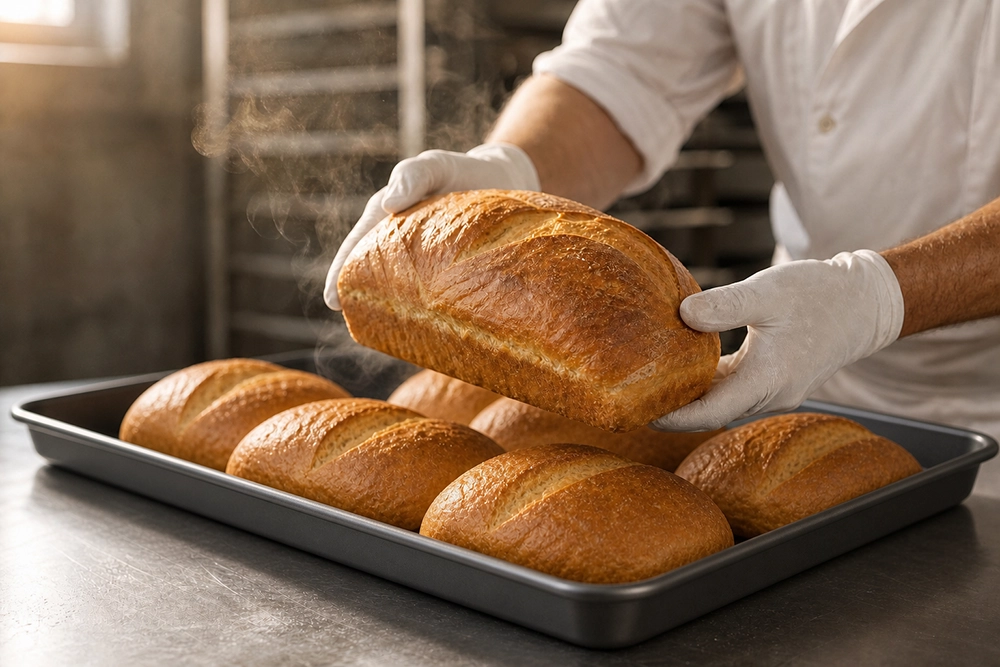
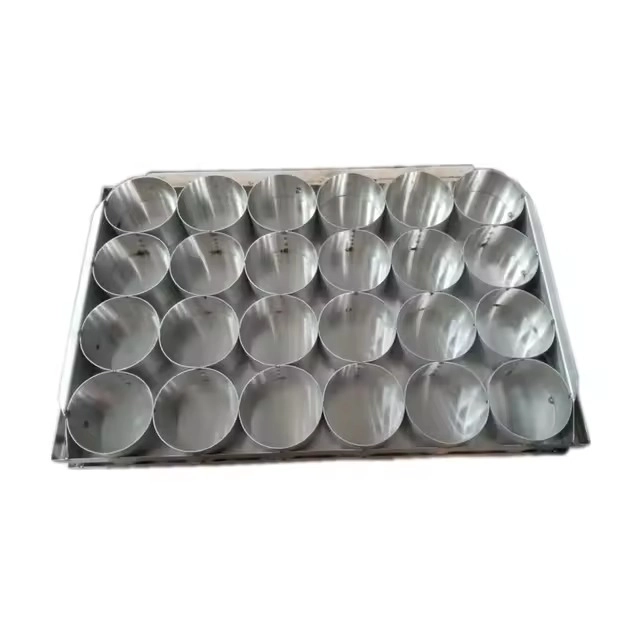
PTFE non-stick baking pans are widely used in commercial bakeries, food factories, restaurants, and industrial baking operations because they provide excellent food release, easy cleaning, and consistent baking performance.
However, even a high-quality PTFE coating requires proper care. Incorrect cleaning methods, excessive heat, metal tools, abrasive materials, or improper storage can gradually reduce the performance and service life of a non-stick baking pan.
With the right cleaning and maintenance routine, commercial users can help preserve the non-stick surface and keep their baking pans performing reliably for longer.
1. Allow the Baking Pan to Cool Before Cleaning
One of the most important rules is simple: do not clean a hot baking pan immediately after removing it from the oven.
Allow the pan to cool naturally before washing. Placing a very hot pan directly into cold water can create a sudden temperature change, which may cause thermal stress, deformation, or other damage to the pan.
For commercial bakeries, it is better to establish a consistent workflow:
Baking → Cooling → Cleaning → Drying → Storage
This simple procedure helps protect both the metal substrate and the non-stick coating.
2. Wash with Warm Water and Mild Detergent
For routine cleaning, warm water and a mild liquid dishwashing detergent are normally sufficient.
After baking:
- Remove loose crumbs and food residue.
- Rinse the pan with warm water.
- Apply a small amount of mild detergent.
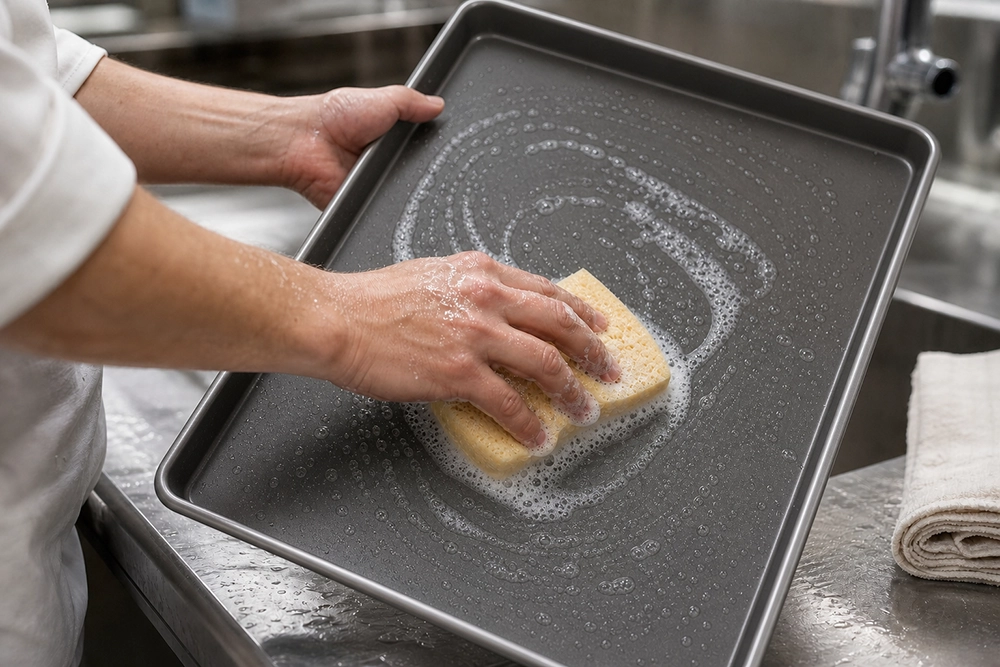
- Gently clean the surface with a soft sponge, cloth, or suitable non-abrasive nylon cleaning pad.
- Rinse thoroughly with clean water.
- Dry the pan completely before storage.
A good PTFE coating is designed to make food release easier, so aggressive scrubbing should generally not be necessary.
If you need to scrub very hard to remove ordinary baking residue, the cleaning method should be reconsidered.
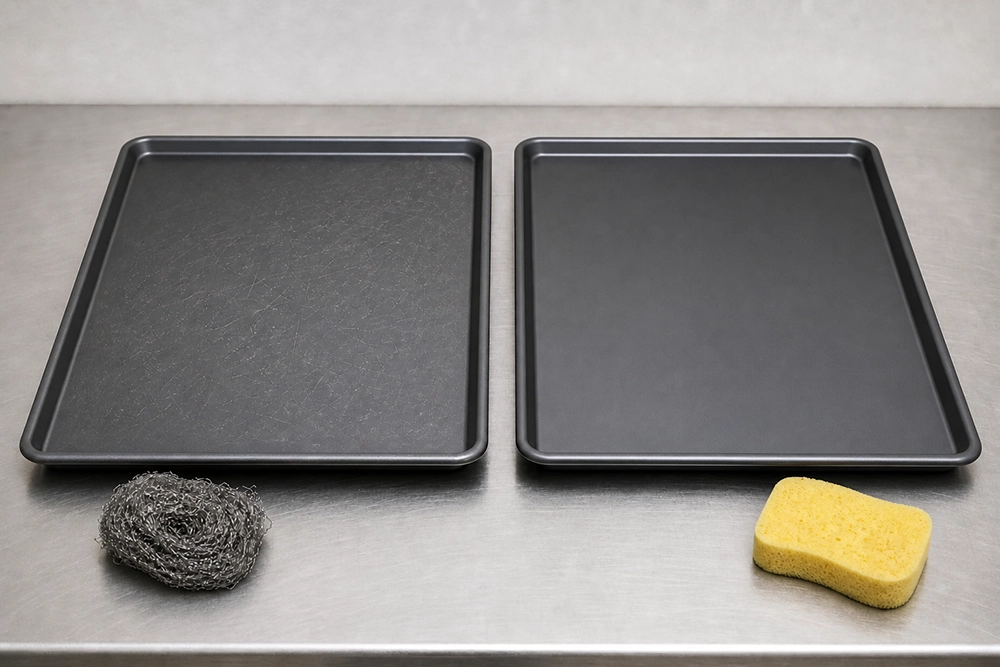
3. Never Use Steel Wool or Abrasive Scouring Pads
Avoid cleaning PTFE-coated baking pans with:
- Steel wool
- Metal brushes
- Metal scouring pads
- Abrasive powders
- Strong abrasive cleaners
- Knives or sharp tools
- Other materials that can scratch the coating
These materials can mechanically damage the non-stick surface. Once the coating has been scratched or worn, continued use of aggressive cleaning methods can accelerate further surface damage.
Professional bakeware care guidance commonly recommends soft sponges, cloths, or non-abrasive nylon cleaning tools instead.
4. How to Remove Baked-On or Stubborn Residue
Sometimes sugar, oil, dough, cheese, or other food ingredients may become baked onto the surface.
Do not immediately use a metal scraper or abrasive pad.
Instead, try the following procedure:
Step 1: Allow the pan to cool completely.
Step 2: Fill or cover the affected area with warm water and mild detergent.
Step 3: Allow the residue to soften for a reasonable period.
Step 4: Gently loosen the softened residue with a soft sponge or non-abrasive nylon pad.
Step 5: Rinse thoroughly and dry completely.
For particularly stubborn residue, repeat the process rather than increasing the mechanical force.
The objective is to soften and remove the residue—not scrape the coating away with it.
5. Avoid Harsh Chemicals and Oven Cleaners
Strong chemical cleaners are not normally necessary for routine maintenance of PTFE-coated bakeware.
Avoid using aggressive cleaning chemicals unless they have been specifically approved for your particular pan and coating system. Products such as strong oven cleaners, abrasive chemical cleaners, and certain highly aggressive detergents may affect the coating or the appearance of the bakeware.
Always follow the cleaning instructions supplied by the bakeware manufacturer.
6. Avoid Metal Utensils and Sharp Tools
Cleaning is only one part of PTFE pan maintenance. The way a pan is used also has a major influence on coating life.
Avoid cutting directly on the pan or using knives, forks, metal scrapers, or other sharp metal tools on the coated surface.
For manual handling and food removal, silicone, plastic, nylon, or wooden tools are generally preferable.
This is especially important when removing products that may stick slightly at the edges. Never forcefully scrape the surface with a metal tool simply to speed up production.
7. Control Baking Temperature
Proper temperature control is important for maintaining non-stick bakeware.
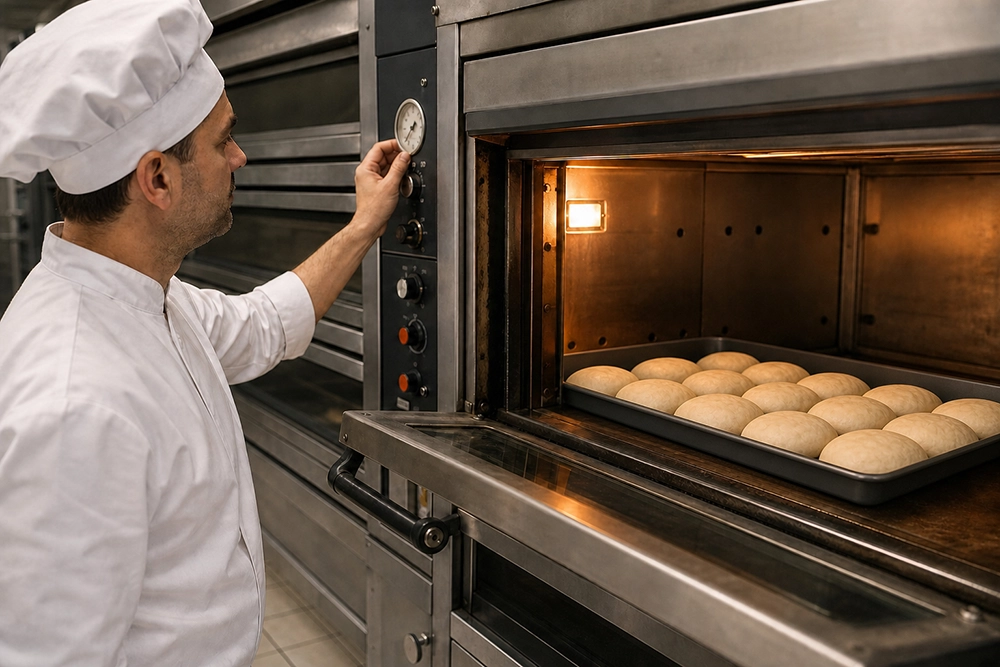
PTFE fluoropolymer coatings have excellent thermal stability under normal use conditions, but the maximum operating temperature depends on the specific coating system and the pan manufacturer's specifications.
Therefore:
- Follow the recommended temperature range from commercial baking trays factory.
- Avoid unnecessary overheating.
- Do not expose the pan to temperatures beyond its specified limit.
- Avoid using a pan empty at excessively high temperatures.
- Make sure the oven's actual operating temperature is properly controlled.
For commercial bakeries, maintaining accurate oven temperature is not only important for product quality—it also helps protect the bakeware.
8. Do Not Put Hot Pans Directly into Cold Water
Thermal shock is another issue that should not be overlooked.
A baking pan may be extremely hot immediately after coming out of an oven. Moving it directly into cold water can create a rapid temperature change.
Instead, allow the pan to cool before washing.
This is particularly important for commercial operations where pans may be cleaned in large quantities. Establishing a designated cooling area before washing can help create a safer and more consistent cleaning process. Manufacturer care instructions similarly recommend allowing non-stick bakeware to cool before cleaning.
9. Is a PTFE Baking Pan Dishwasher Safe?
This is an important question for commercial customers.
The answer depends on the specific pan, coating system, and manufacturer's instructions. Some non-stick bakeware products are dishwasher-safe, while many manufacturers still recommend hand washing because repeated exposure to aggressive dishwasher detergents and cleaning conditions may shorten the life of the coating.
For commercial PTFE-coated baking pans where maximum coating life is the priority, gentle hand washing is generally the safer maintenance choice unless the manufacturer specifically approves dishwasher cleaning.
If your production facility uses automated washing equipment, we recommend confirming detergent concentration, water temperature, mechanical action, and cleaning-cycle parameters with the bakeware supplier before implementing the process.
10. Dry the Pans Thoroughly Before Storage
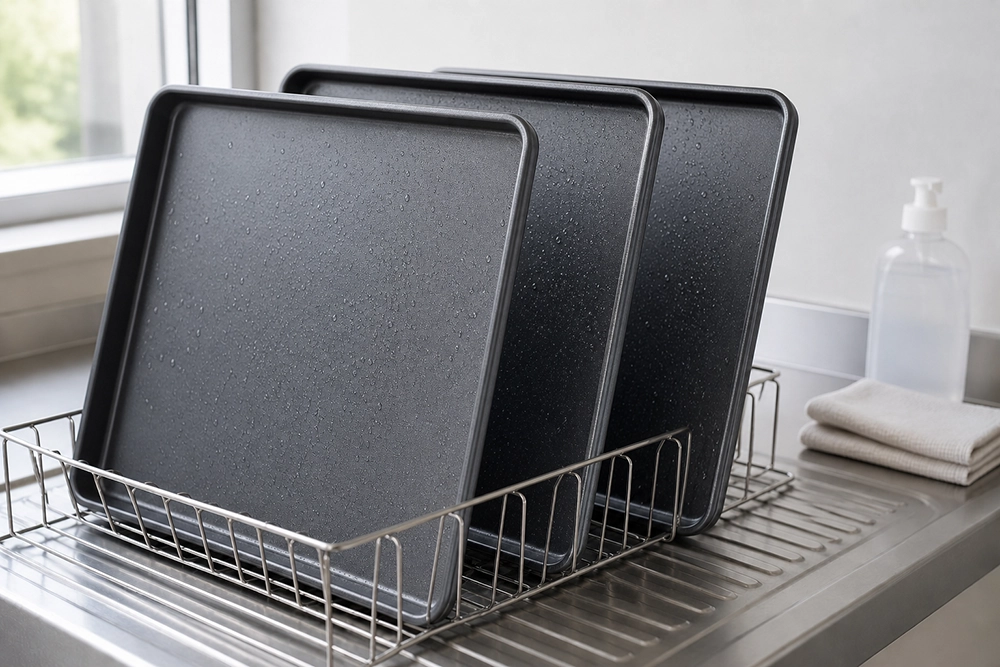
After washing, rinse the baking pan thoroughly and dry it completely.
Do not immediately stack wet pans together.
Proper drying helps prevent water spots, residue accumulation, and unnecessary exposure of the pan to moisture during storage.
For high-volume bakery operations, clean and dry pans should be stored in a designated area away from unnecessary impact, contamination, and moisture.
11. Store Baking Pans Carefully
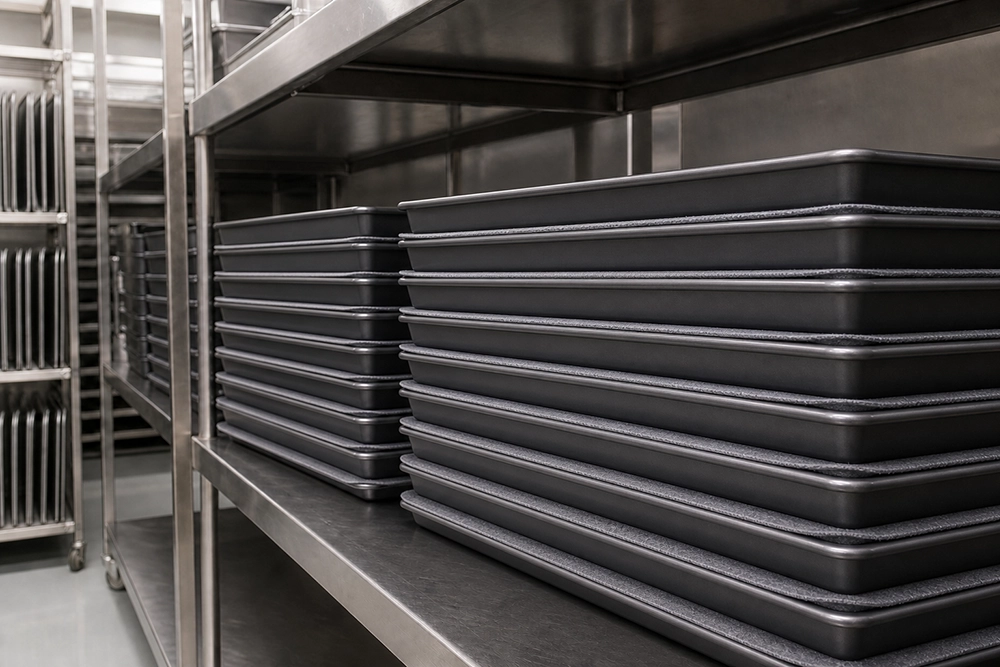
Commercial baking pans are often stacked because of limited storage space. However, careless stacking can cause unnecessary scratches, dents, and impact damage.
When stacking PTFE-coated pans:
- Avoid dragging one pan across another.
- Do not throw or drop pans into a stack.
- Avoid contact between sharp edges and coated surfaces.
- Use suitable separators or protective layers when necessary.
- Store pans in a stable and organized position.
For large-scale bakeries, proper storage procedures are especially important because repeated handling can accumulate into significant wear over time. Protective layers between stacked pans are also recommended by some bakeware manufacturers to reduce scratches and dents.
12. Establish a Standard Cleaning Procedure for Commercial Bakeries
For industrial and commercial baking operations, maintenance should not depend entirely on individual workers.
A simple standardized procedure can significantly improve consistency (recommendations from Tsingbuy industrial oven pan supplier in China):
Recommended Commercial Cleaning Workflow
1. Remove from oven
↓
2. Allow the pan to cool naturally
↓
3. Remove loose crumbs and food residue
↓
4. Wash with warm water and mild detergent
↓
5. Clean gently with a soft sponge or non-abrasive pad
↓
6. Rinse thoroughly
↓
7. Dry completely
↓
8. Inspect the coating and pan condition
↓
9. Store carefully without damaging the coated surface
For automated bakery production systems, the cleaning process should also be evaluated together with the pan material, coating specification, washing equipment, detergent, water temperature, and cleaning cycle.
13. Inspect the Coating Regularly
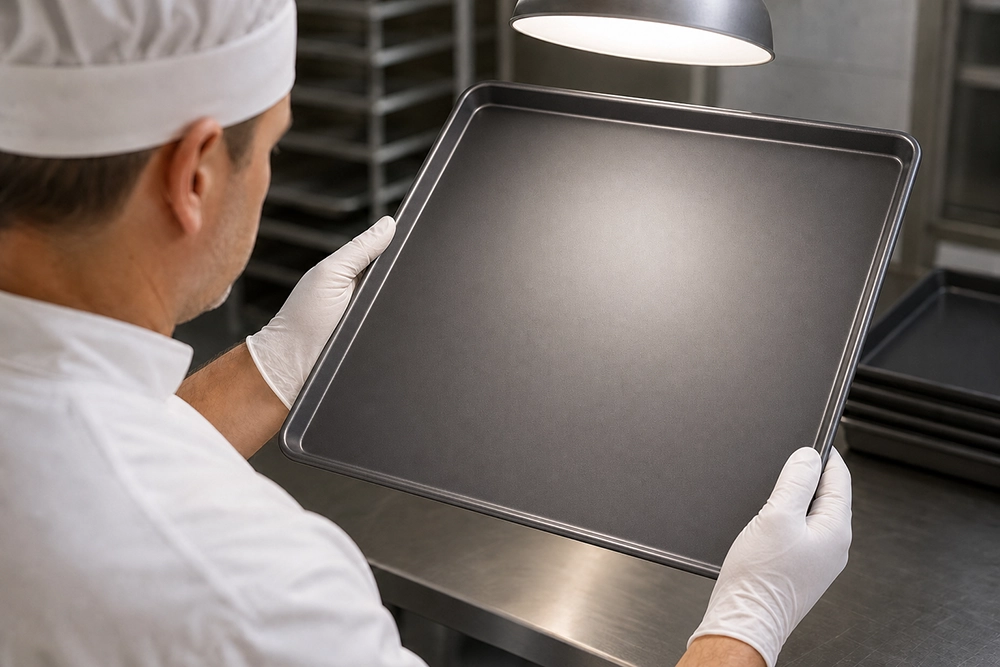
Regular inspection is particularly important for commercial users.
During routine maintenance, check for:
- Visible scratches
- Peeling or flaking
- Unusual discoloration
- Severe surface wear
- Dents or deformation
- Areas where food begins sticking unexpectedly
- Damage around edges, corners, or contact points
A change in food-release performance can sometimes indicate that the pan requires cleaning, but it may also indicate coating wear or mechanical damage.
If significant coating damage is observed, the pan should be evaluated according to the manufacturer's recommendations rather than continuing to use increasingly aggressive cleaning methods.
Common Mistakes That Shorten PTFE Pan Life
Many coating problems are not caused by the coating itself, but by improper handling.
❌ Cleaning while the pan is still extremely hot
Better: Allow the pan to cool before washing.
❌ Using steel wool or metal scrubbers
Better: Use a soft sponge or non-abrasive nylon pad.
❌ Scraping baked-on food with a knife
Better: Soften the residue with warm water and mild detergent first.
❌ Using harsh abrasive cleaners
Better: Use mild cleaning products recommended for non-stick surfaces.
❌ Dragging pans across each other
Better: Lift pans when stacking or moving them.
❌ Stacking wet pans
Better: Dry completely before storage.
❌ Exceeding the coating's specified temperature
Better: Follow the coating and pan manufacturer's temperature recommendations.
❌ Assuming every PTFE pan has the same care requirements
Better: Follow the specific technical specifications provided by the manufacturer.
How Proper Maintenance Protects Your Investment
For commercial bakeries and food manufacturers, baking pans are production tools—not disposable kitchen accessories.
A high-quality PTFE-coated baking pan can provide excellent food release and efficient cleaning, but its actual service life depends on the entire operating environment.
Good coating + proper temperature control + correct cleaning + careful handling + proper storage = longer-lasting bakeware performance.
Proper maintenance can help reduce premature coating wear, maintain food-release performance, improve cleaning efficiency, and reduce unnecessary replacement costs.
Final Recommendations
To maximize the service life of PTFE non-stick baking pans, remember these five basic principles:
1. Cool before cleaning.
Never expose a very hot pan to cold water.
2. Clean gently.
Use warm water, mild detergent, and non-abrasive cleaning tools.
3. Avoid scratching.
Do not use metal utensils, knives, steel wool, or abrasive scouring pads.
4. Follow temperature specifications.
Do not exceed the recommended operating temperature of the specific coating system.
5. Store carefully.
Keep pans clean and dry, and avoid unnecessary impact or friction during stacking and handling.
With proper care, PTFE-coated baking pans can maintain their non-stick performance and provide reliable service throughout demanding commercial baking operations.
If you are looking for customized PTFE non-stick baking pans for commercial bakeries, food factories, or automated production lines, choosing the right substrate material, pan thickness, coating system, coating specification, and production process is just as important as proper daily maintenance. Tsingbuy PTFE non-stick baking pans manufacturer in China provides professional and full customization of commercial baking pans, which can also be designed seamlessly integrated into automation production lines.