
Built to Last: How We Achieve Long-Lasting Non-Stick Coatings on Commercial Baking Pans
Contents
- 1. Why Does a High-Quality Non-Stick Coating Matter?
- 2. Dual-Stage Surface Cleaning for a Clean Coating Foundation
- 3. Precision Sandblasting Creates the Right Surface Texture
- 4. Multi-Layer Coating for Better Durability and Heat Resistance
- 5. Robotic Precision Spraying for Consistent Coating Quality
- 6. Every Layer Is Controlled—Not Just the Final Appearance
- 7. Designed for Repeated Commercial Baking
- 8. More Than Non-Stick: The Benefits for Commercial Bakeries
- 9. Why Choose Tsingbuy for Custom Non-Stick Baking Pans?
- 10. Quality Starts Before the Coating Is Sprayed
- 11. Frequently Asked Questions
1.Why Does a High-Quality Non-Stick Coating Matter?
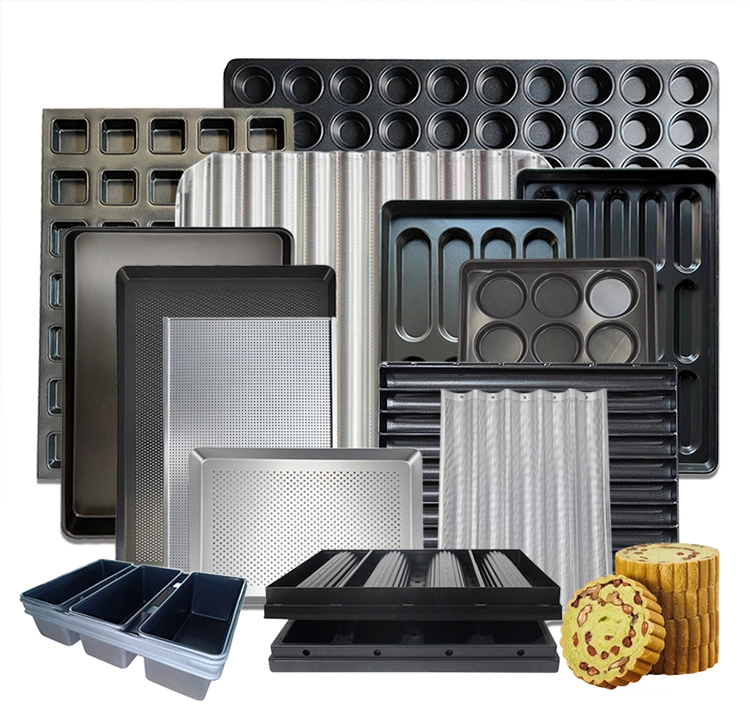
For commercial bakeries and food production facilities, a baking pan is more than a simple baking tool. It is a production component that may be used hundreds or even thousands of times.
A poor-quality coating can quickly become a costly problem.
Some ordinary baking pans may experience coating scratches, peeling, flaking, or loss of non-stick performance after relatively limited use. Once the coating begins to fail, products may stick to the pan, demolding becomes more difficult, cleaning takes longer, and the pan may need to be replaced prematurely.
At Tsingbuy non-stick commercial baking pans manufacturer in China, we take a different approach.
Our non-stick commercial baking pans are manufactured through a controlled multi-stage coating process designed to improve coating adhesion, durability, heat resistance, and long-term release performance.
Under appropriate operating, cleaning, and maintenance conditions, our coated baking pans can achieve a stable service performance of approximately 1,000–2,000 uses, helping commercial bakeries reduce replacement frequency and maintain consistent production efficiency.
So, what makes the difference?
The answer lies not in the coating alone, but in the entire coating process—from surface preparation to final inspection.
2.Dual-Stage Surface Cleaning for a Clean Coating Foundation
A durable coating starts with a properly prepared surface.
Before coating, the surface of a baking pan may contain oil, processing residues, dust, and microscopic contaminants. If these impurities are not completely removed, they can interfere with the adhesion between the coating and the metal substrate.
Instead of relying on simple washing, we use a two-stage professional cleaning process.
Stage 1: Room-Temperature Alkaline Cleaning
The semi-finished baking pan is treated with an alkaline cleaning solution at controlled conditions.
This process helps remove:
- Oil and grease
- Processing residues
- Surface contaminants
- Other impurities generated during manufacturing
The objective is to create a clean and stable metal surface before further treatment.
Stage 2: High-Temperature Deep Cleaning
The surface then undergoes a second, deeper cleaning process under high-temperature conditions.
This step helps remove fine contaminants that may remain after the initial cleaning stage.
By minimizing surface impurities before coating, we create a stronger foundation for coating adhesion.
Clean substrate → Better adhesion → More durable coating
This seemingly basic step is one of the important differences between a controlled industrial coating process and a simple coating application.
3. Precision Sandblasting Creates the Right Surface Texture
Cleaning alone is not enough.
For a coating to remain firmly attached to a metal baking pan through repeated heating, cooling, washing, and production cycles, the surface needs an appropriate microscopic texture.
This is why we use a precision sandblasting process with a mixture of two specialized abrasive materials.
The purpose is not simply to make the surface rough. The surface texture needs to be controlled within an appropriate range.
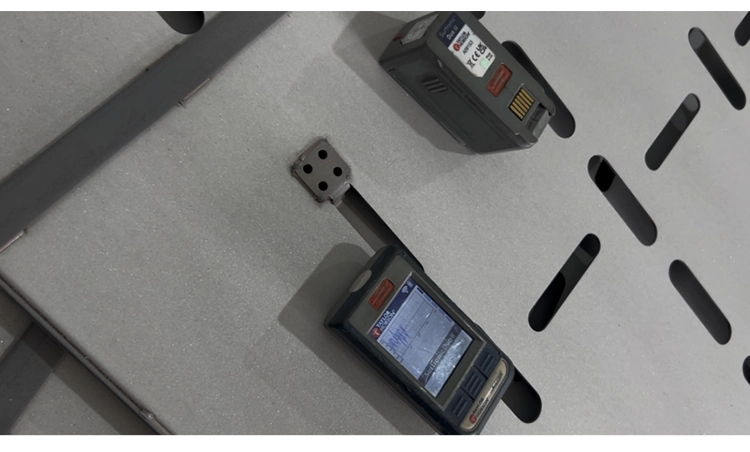
With precision equipment and inspection instruments, we control the surface roughness at approximately 3 microns.
Why Does Surface Roughness Matter?
An appropriately textured metal surface provides the coating with a better mechanical bonding foundation.
The coating can effectively "lock" into the microscopic texture of the substrate, improving adhesion and helping reduce the risk of:
- Coating peeling
- Flaking
- Delamination
- Premature coating failure
In other words, we do not simply spray coating onto a smooth metal surface.
We engineer the surface before applying the coating.
4. Multi-Layer Coating for Better Durability and Heat Resistance
The coating itself is another critical factor.
Rather than relying on a single coating layer, our process uses a multi-layer coating system, with different layers performing different functions.
High-Temperature Primer
A specialized high-temperature primer is applied as the foundation layer.
The primer helps strengthen the connection between the metal substrate and the subsequent coating layers.
It is designed to improve overall coating durability and resistance to high-temperature baking conditions, helping reduce the risk of cracking and premature coating failure during repeated thermal cycles.
Food-Grade PTFE Non-Stick Topcoat
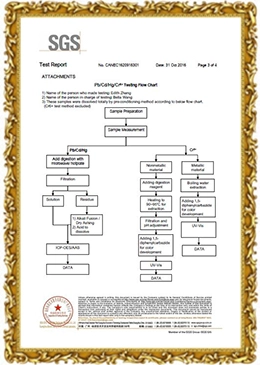
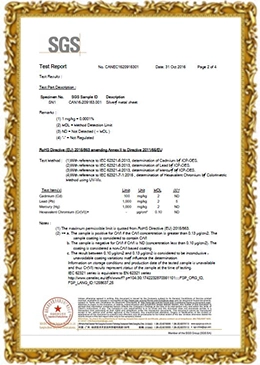
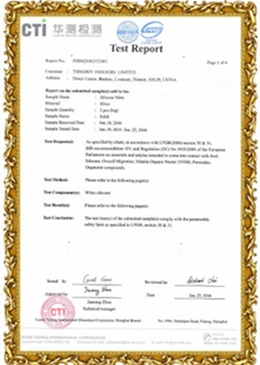
The surface layer uses DuPont™ food-grade PTFE coating according to the specified coating system.
PTFE is widely recognized for its excellent non-stick and release properties.
For commercial baking applications, the surface coating needs to provide several important characteristics:
- Effective non-stick performance
- Easy product release
- High-temperature resistance
- Smooth surface
- Easier cleaning
- Consistent baking performance
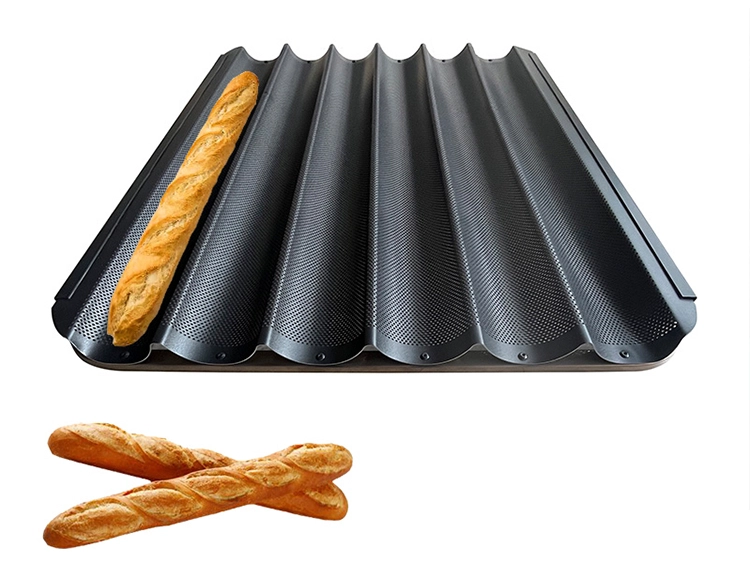
For products such as bread, cakes, muffins, cupcakes, pastries, and other baked goods, good release performance can significantly improve production efficiency.
5. Robotic Precision Spraying for Consistent Coating Quality
Even with high-quality coating materials, the final result depends heavily on how the coating is applied.
Manual spraying can result in variations in coating thickness, uneven coverage, or missed areas.
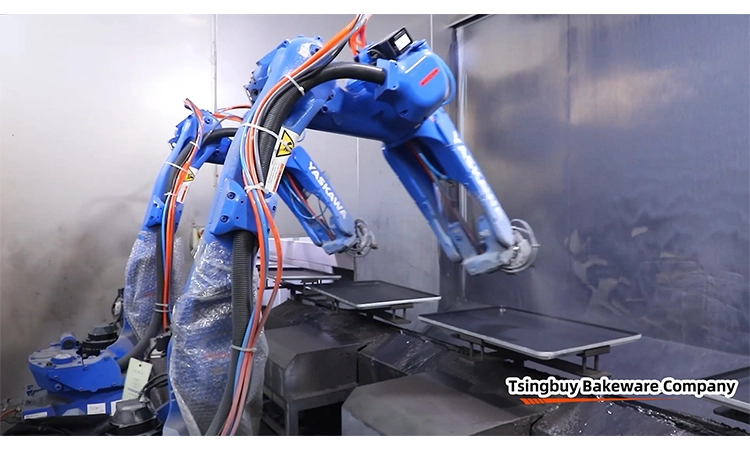
To improve consistency, we use high-precision Japanese robotic spraying equipment during the coating process.
The automated spraying system helps achieve:
- More uniform coating thickness
- Consistent surface coverage
- Reduced variation between products
- Better coverage of complex pan structures
- Improved production consistency
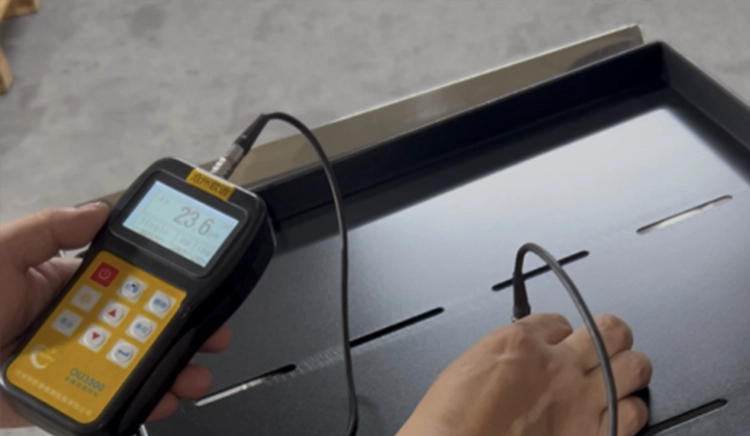
After spraying, the coated baking pans undergo precision inspection to verify that the coating thickness meets the required standards.
This combination of automated spraying + precision inspection helps us maintain consistent coating quality across production batches.
6. Every Layer Is Controlled—Not Just the Final Appearance
A common misconception is that a good non-stick baking pan is simply a pan with a smooth-looking coating.
In reality, coating performance depends on multiple factors working together.
Our process focuses on the complete manufacturing chain:
Surface cleaning
Precision surface roughening
Primer application
PTFE topcoat application
Robotic precision spraying
Coating thickness inspection
Final quality control
Each stage contributes to the final performance of the baking pan.
This is why we focus on process control rather than simply coating the finished pan.
7. Designed for Repeated Commercial Baking
Commercial baking environments are significantly more demanding than occasional home baking.
A commercial baking pan may repeatedly experience:
- High baking temperatures
- Continuous heating and cooling
- Frequent demolding
- Repeated washing
- Handling and transportation
- Long production cycles
- Integration with automated production systems
The coating therefore needs to maintain its performance through repeated production cycles.
With our controlled surface preparation, multi-layer coating system, precision spraying, and inspection process, our coated baking pans are designed for demanding commercial applications.
Under proper use and maintenance conditions, selected coated baking pans can achieve approximately 1,000–2,000 uses while maintaining good coating integrity and non-stick performance.
For bakeries producing thousands of pieces every day, extending the useful life of a baking pan can make a meaningful difference to overall operating costs.
8. More Than Non-Stick: The Benefits for Commercial Bakeries
A durable coating brings benefits beyond easier demolding.
Easier Product Release
A reliable non-stick surface helps baked products release more easily from the pan, reducing product damage and deformation.
Faster Cleaning
Less residue sticking to the surface can make cleaning and maintenance more efficient.
Longer Pan Service Life
A durable coating can help extend the usable life of the baking pan and reduce the frequency of replacement.
More Consistent Production
Stable release performance helps maintain consistent production results across repeated baking cycles.
Better Compatibility with Industrial Production
For industrial bakeries, bakeware is often used together with automated loading, baking, cooling, demolding, and conveying systems. Consistent pan dimensions and coating performance can therefore become important parts of the overall production process.
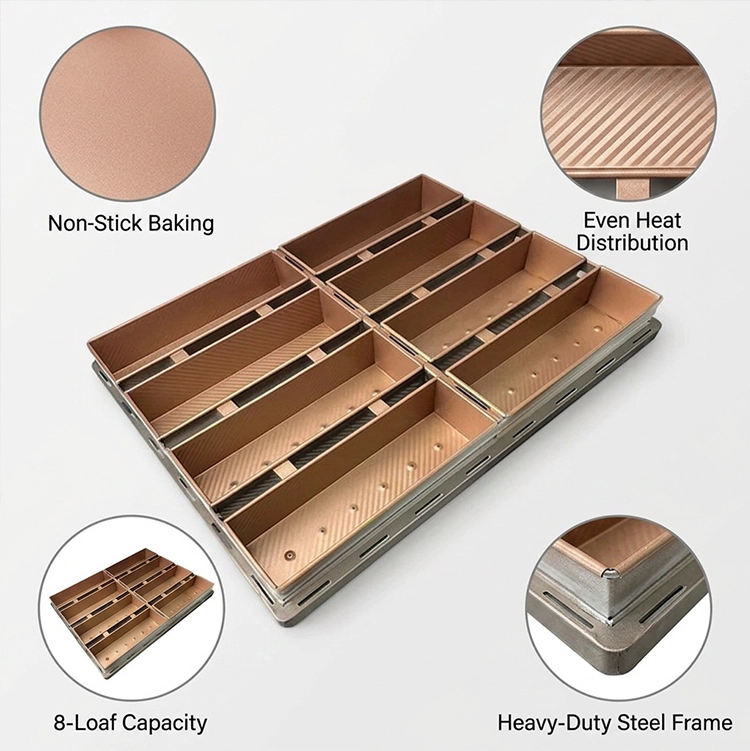
9. Why Choose Tsingbuy for Custom Non-Stick Baking Pans?
As a professional non-stick baking trays factory in China, Tsingbuy provides OEM and ODM customization for customers with different production requirements.
We can customize baking pans according to factors such as:
- Pan dimensions
- Number of cavities
- Cavity shape
- Material
- Metal thickness
- Coating type
- Coating color
- Surface treatment
- Perforation
- Edge and rim structure
- Automated production requirements
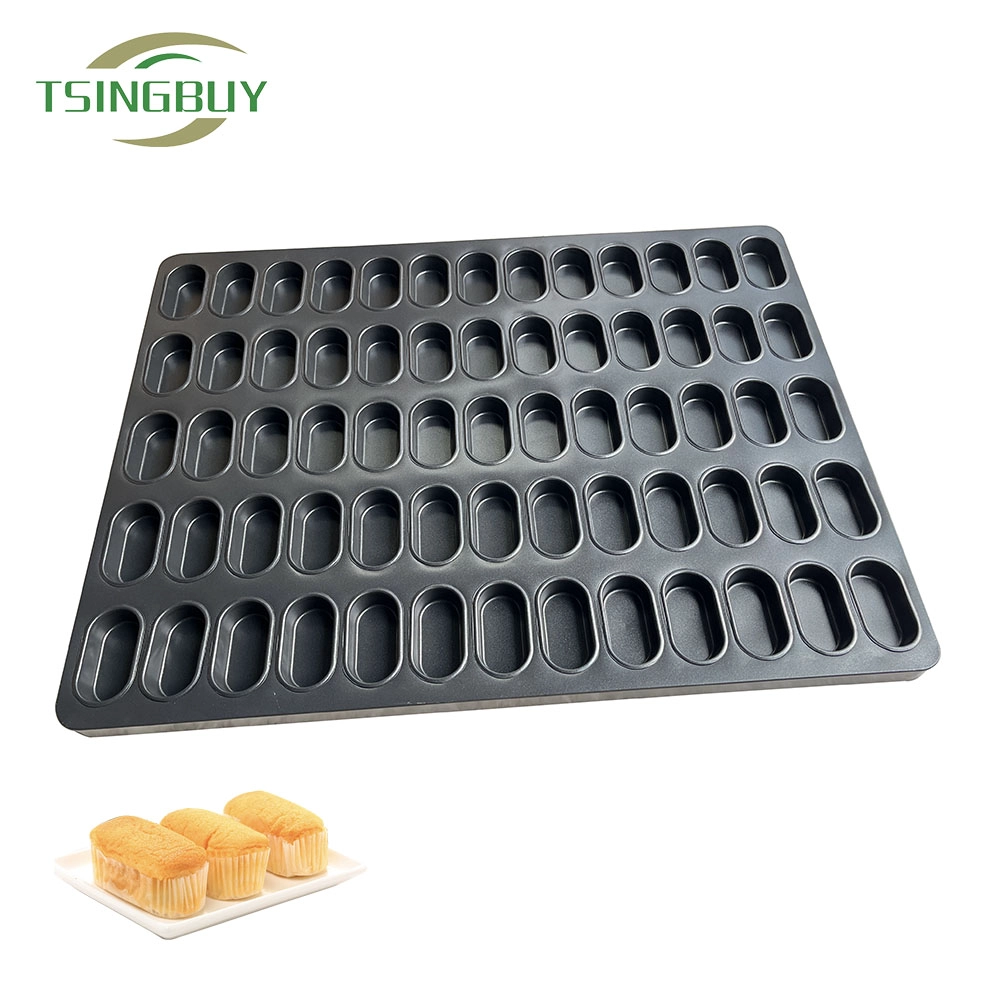
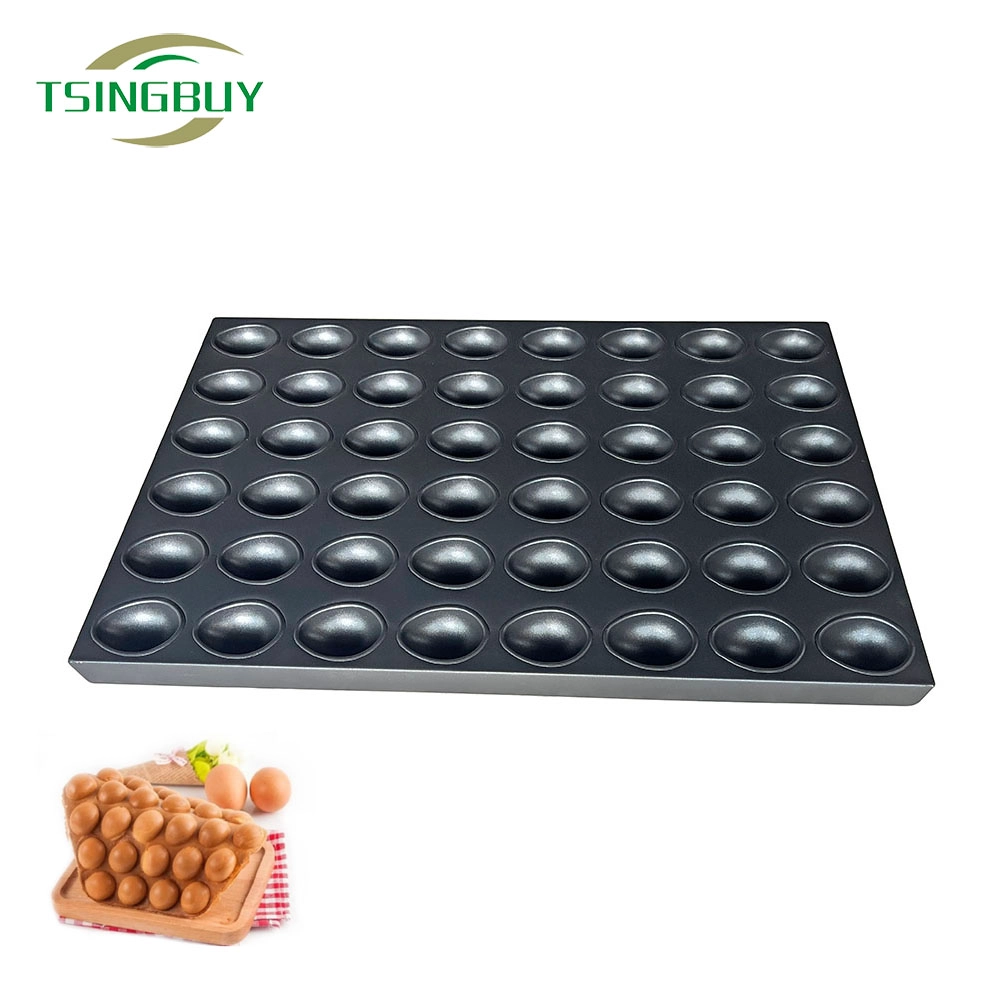
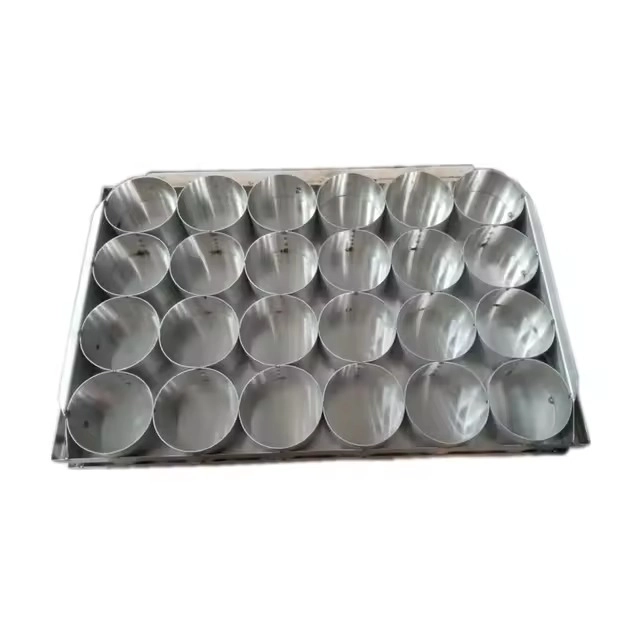
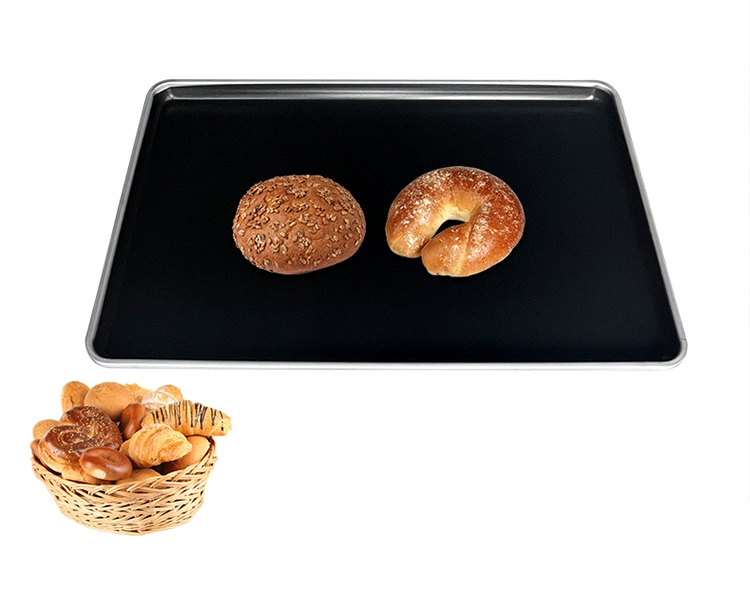
Whether you need sheet pans, loaf pans, baguette pans, muffin pans, cupcake pans, hamburger pans, donut pans, cake pans, or other customized industrial baking trays, we can develop the pan structure and coating specifications according to your application.
For customers operating high-volume bakery production lines, we can also consider the requirements of industrial ovens and automated production systems when designing the bakeware.
10. Quality Starts Before the Coating Is Sprayed
A long-lasting non-stick baking pan is not created by simply choosing an expensive coating material.
It is created through a complete and controlled manufacturing process.
At Tsingbuy, we pay attention to every stage:
Clean the surface thoroughly.
Create the right surface texture.
Build a multi-layer coating system.
Apply the coating with precision equipment.
Inspect coating thickness and consistency.
Control the process from beginning to end.
The result is a commercial baking pan designed to provide durable coating adhesion, long-lasting non-stick performance, easy demolding, and reliable service life.
For professional bakeries and food manufacturers, the goal is not simply to buy a baking pan.
The goal is to choose bakeware that can keep working reliably throughout thousands of production cycles.
That is the difference between simply applying a coating and engineering a durable non-stick baking pan.
11. Frequently Asked Questions
① How long does the non-stick coating on your baking pans last?
Under appropriate operating, cleaning, and maintenance conditions, selected baking pans by Tsingbuy PTFE baking pan supplier in China can achieve approximately 1,000–2,000 uses while maintaining good coating integrity and release performance. Actual service life depends on factors such as baking temperature, production frequency, cleaning methods, handling, and product formulation.
② What type of non-stick coating do you use?
Our specified coating system uses food-grade PTFE (silicone coating is also optional for high-suger products), with a multi-layer coating structure that includes a high-temperature primer and non-stick topcoat.
③ How do you prevent the coating from peeling?
We control the entire coating process, including dual-stage surface cleaning, precision sandblasting, primer application, robotic spraying, coating thickness control, and final inspection. Proper surface preparation is especially important for achieving strong coating adhesion.
④ Why do you use sandblasting before coating?
Precision sandblasting creates a controlled microscopic surface texture that helps the coating mechanically bond with the metal substrate. We control the surface roughness at approximately 3 microns according to the specified process.
⑤ Is the coating suitable for commercial bakeries?
Yes. Our coated baking pans are designed for commercial and industrial baking applications, including bakeries, food factories, restaurants, wholesalers, and automated production systems.
⑥ Can you customize the baking pan?
Yes. We provide OEM and ODM services and can customize dimensions, cavity configuration, materials, thickness, coating specifications, and other structural requirements according to your application.
⑦ How should coated baking pans be maintained?
To maximize coating life, we recommend following the specified operating temperature range, avoiding sharp tools and abrasive cleaning materials, and using suitable cleaning procedures. Proper handling and maintenance are essential for achieving long service life.
A high-quality coating matters, but proper maintenance is equally important for long-term performance. Click to learn How to Clean and Maintain PTFE Non-Stick Baking Pans?
