- Why Changeover Efficiency Matters in Industrial Bakeries
- Common Challenges When Switching Between Bakery Products
- How Custom Baking Pans Support Faster Changeovers
- Choosing the Right Pan Design for Different Bakery Products
- Customization Options That Improve Production Flexibility
- Tsingbuy: Custom Bakeware Solutions for Industrial Production
In modern industrial bakeries, production efficiency depends on more than the speed of baking equipment. The ability to switch between different products smoothly, maintain consistent quality, and minimize unnecessary production interruptions is equally important.
As bakeries expand their product ranges, they may need to produce different bread shapes, loaf sizes, buns, rolls, and other baked goods on the same production line. Each product may require a different pan configuration, mold layout, or baking process.
This is where custom baking pans can make a practical difference.
By designing baking pans according to product requirements and production line specifications, industrial bakeries can improve production flexibility, simplify pan handling, and reduce avoidable setup difficulties.
In this article, we explore how custom baking pan design supports changeover efficiency and what bakeries should consider when developing bakeware for commercial and industrial production.
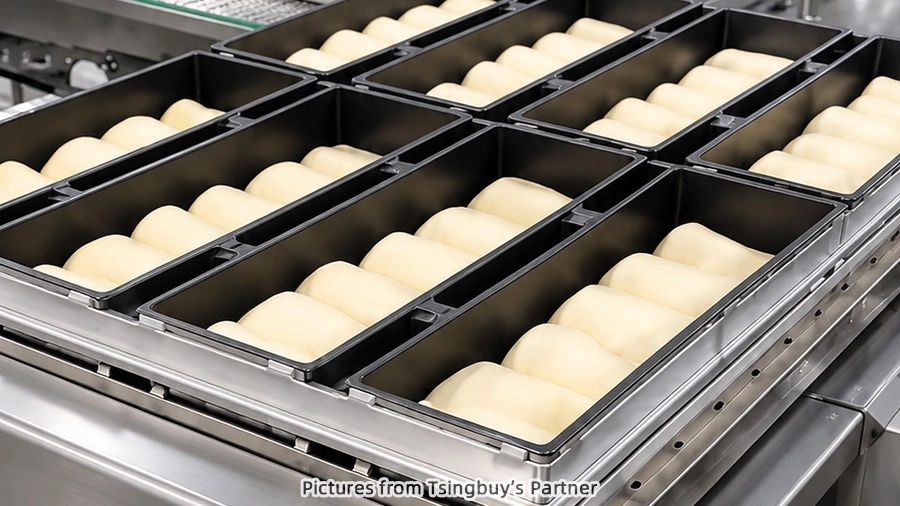
Changeover refers to the process of preparing a production line to manufacture a different product after completing the previous production run.
Depending on the bakery's production process, changeover activities may include:
- Removing pans used for the previous product
- Cleaning and inspecting baking pans
- Replacing or adjusting pan configurations
- Changing production settings
- Adjusting pan positioning and conveyor guides
- Preparing the line for the next product
- Checking the first batch before regular production begins
During these activities, production may be interrupted or operate below its normal capacity.
For industrial bakeries producing multiple product varieties, frequent changeovers can affect daily production schedules and equipment utilization.
A well-planned changeover process helps bakery operators use available production time more effectively. It also supports more flexible manufacturing, allowing bakeries to respond to different customer orders without unnecessary operational complexity.
Although baking pans are only one component of the production line, their design can influence several activities involved in changing from one product to another.
Different bakery products have different requirements. A pan suitable for sandwich bread may not be appropriate for baguettes, hamburger buns, or individual molded products.
When baking pans are not properly matched to the production process, several challenges may occur.
Different Pan Sizes and Production Line Compatibility
Industrial bakery lines are designed around specific dimensions and handling requirements.
If a new baking pan has a different length, width, height, or edge structure, it may not fit the existing conveyor system correctly.
In some cases, the bakery may need to adjust conveyor guides, pan positioning systems, or other handling components before production can begin.
For this reason, pan dimensions should be confirmed before introducing a new product to an existing production line.
Different Mold Layouts and Product Arrangements
The number and arrangement of molds on a baking tray directly affect how products are placed during production.
For example, a bakery may produce several types of rolls using different dough portions or product shapes. These products may require different mold dimensions or spacing.
If the pan layout does not match the depositing or panning equipment, operators may need to make additional adjustments.
A properly designed mold layout helps align the baking pan with the intended product arrangement and production process.
Pan Handling and Stacking Difficulties
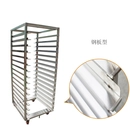
Baking pans are frequently moved between different production stages, including loading, proofing, baking, cooling, cleaning, and storage.
Poorly designed edges, inconsistent dimensions, or unsuitable stacking structures may make pan handling more difficult.
When pans are used in large quantities, even small handling problems can become repetitive operational challenges.
Cleaning and Maintenance Requirements
Different products may leave different residues on baking surfaces.
For bakeries that change products frequently, cleaning and inspection are important parts of the production preparation process.
Pan design should consider the cleaning method, coating requirements, edge construction, and areas where food residue may accumulate.
A suitable design can make routine handling and maintenance more practical. For industrial bakeries planning to expand their product range, working with an experienced industrial baking pan manufacturer in China can help ensure that new baking pans are developed according to actual production requirements. By confirming pan dimensions, mold layouts, and handling specifications in advance, bakeries can reduce compatibility issues and prepare their production lines more efficiently when switching between products.
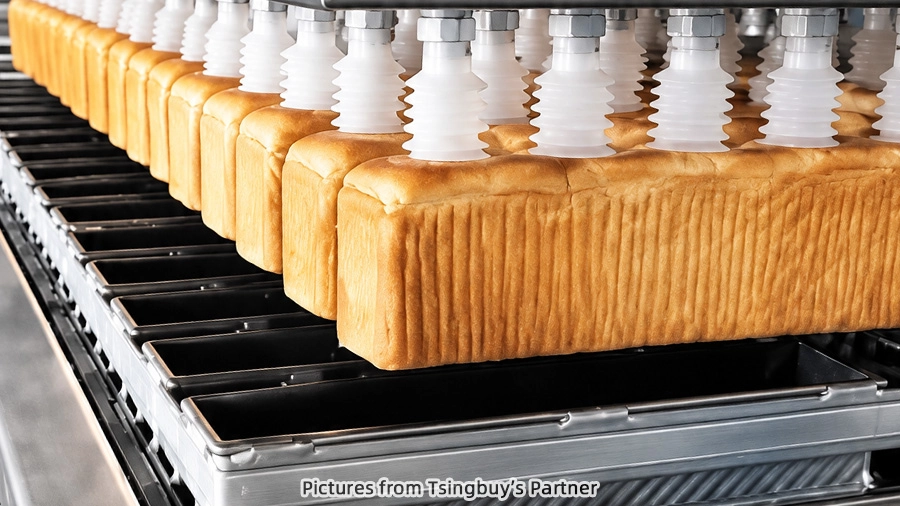
Custom baking pans are developed according to specific product requirements and production conditions rather than relying only on standard dimensions.
The objective is not simply to create a pan with a different size. It is to develop bakeware that works properly within the bakery's existing or planned production system.
Matching Pan Dimensions to the Production Line
The first step is to confirm the dimensions required by the production line.
Important specifications include:
- Overall pan length and width
- Pan height or mold depth
- Edge and corner design
- Conveyor compatibility
- Required clearance between pans
- Pan positioning and handling requirements
When these specifications are confirmed in advance, bakeries can reduce the risk of introducing pans that require unexpected adjustments.
Optimizing Mold Quantity and Arrangement
For multi-mold baking pans, the number of cavities and their arrangement should be designed according to the product and production equipment.
A higher number of molds may increase the number of products produced per pan, but the layout must also allow sufficient spacing and proper product formation.
The mold arrangement should consider:
- Product dimensions and shape
- Dough portion size
- Distance between molds
- Pan loading method
- Depanning requirements
- Baking performance
A well-planned mold layout can help bakeries achieve a more consistent product arrangement and improve compatibility with automated or semi-automated production.
Designing for Efficient Pan Handling
Pan handling should be considered throughout the production process.
Depending on the application, custom baking pans may require specific edge structures, reinforced frames, or stacking features.
These details can help improve stability during transportation and storage.
For bakeries using automated pan handling systems, the design should also be checked against the requirements of the conveyor, pan setter, depanner, and other related equipment.
Selecting Suitable Materials and Coatings
Material and coating selection should be based on the product, baking conditions, and expected service requirements.
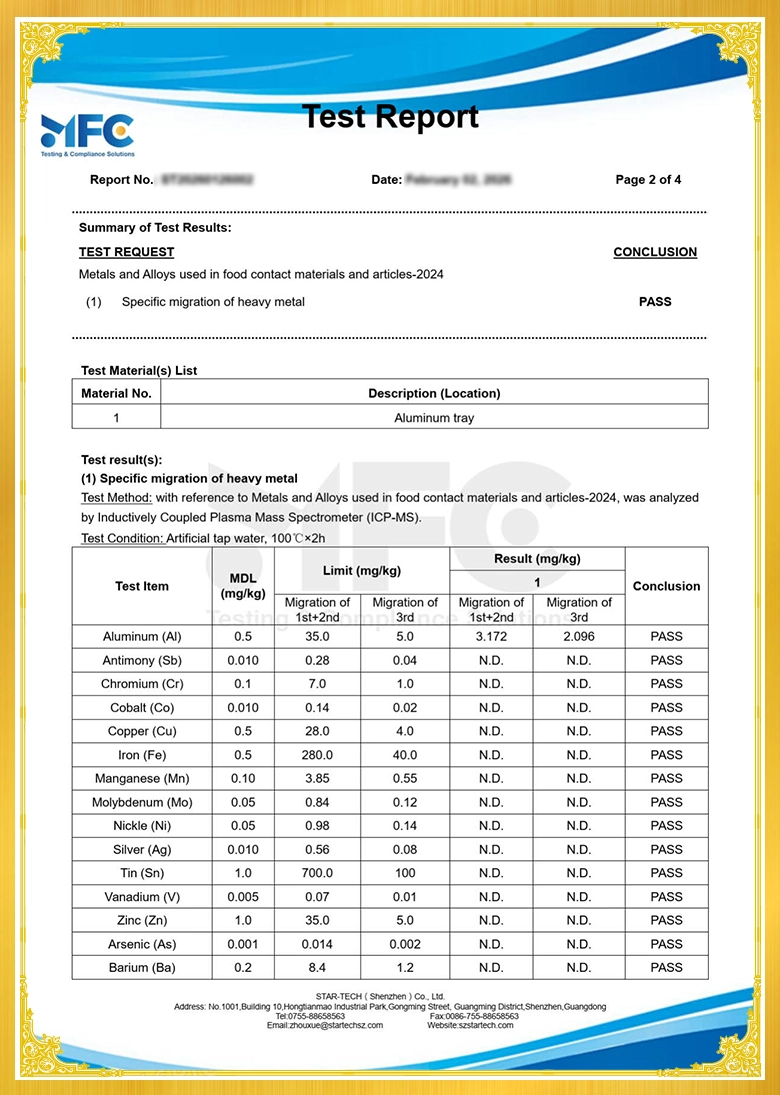
Common options include aluminized steel, aluminum, and stainless steel.
Different coating options may also be considered according to the product and application. For example, PTFE non-stick coatings are commonly used for applications where easy release is required, while silicone coatings may be suitable for certain high-sugar products.
The right combination of material and surface treatment can support reliable baking performance and practical maintenance.
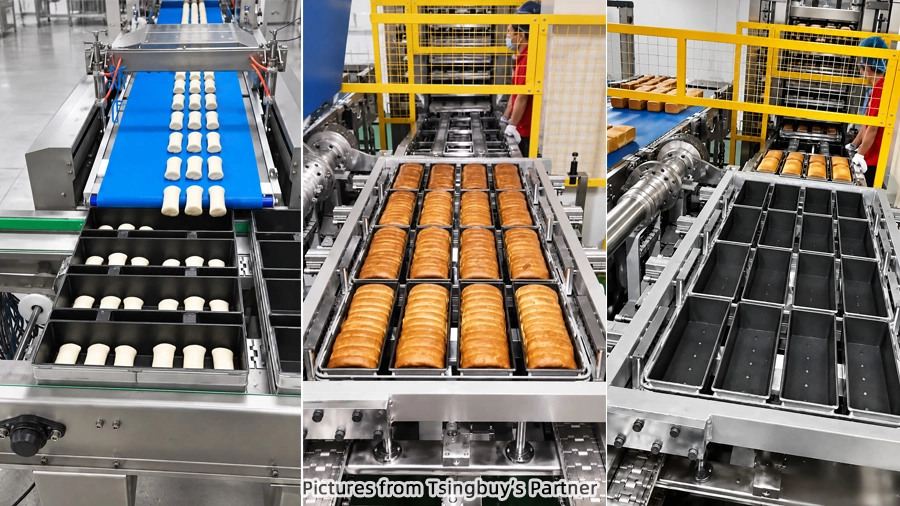
Different products require different baking pan designs. Selecting the appropriate structure can help reduce unnecessary adjustments during production.
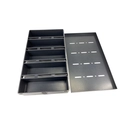
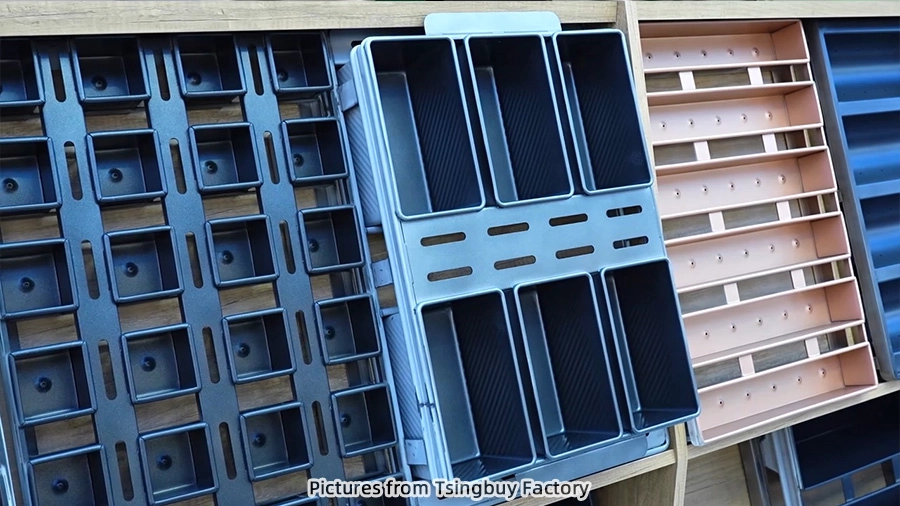
Sheet Pans for Bread and Bakery Products
Sheet pans are widely used in commercial and industrial bakeries.
They may be designed in standard or custom dimensions according to the oven, rack, conveyor, and production requirements.
Options may include:
- Smooth or perforated surfaces
- Flat or corrugated surfaces
- Different edge structures
- Various materials and coatings
- Custom dimensions
For bakeries producing different products on the same line, confirming pan dimensions and handling requirements is essential before introducing a new sheet pan specification.
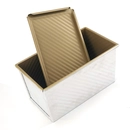
Loaf Pans for Sandwich Bread and Toast
Loaf pans are designed for products such as sandwich bread, toast bread, and Pullman bread.
Depending on the product, a bakery may require individual loaf pans, multi-mold loaf pans, or pans with specific dimensions and structures.
Custom loaf pans can be developed according to bread size, mold quantity, production line requirements, and baking conditions.
For bakeries producing several loaf varieties, a clear pan specification system can help simplify production planning and pan management.
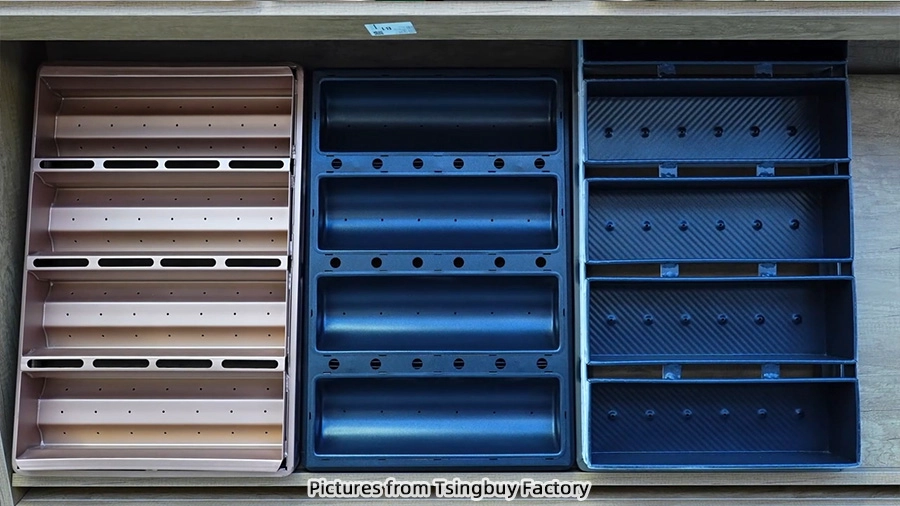
Baguette Trays for Long Bread Products
Baguette trays are designed to support the shape of long bread products during proofing and baking.
The number of rows, tray dimensions, channel shape, and surface structure should be determined according to the product and production process.
Industrial bakeries may require large-format baguette trays or custom configurations to match their production equipment.
A suitable tray design helps maintain consistent product positioning and supports efficient handling throughout the baking process.
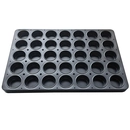
Multi-Mold Baking Pans for High-Volume Production
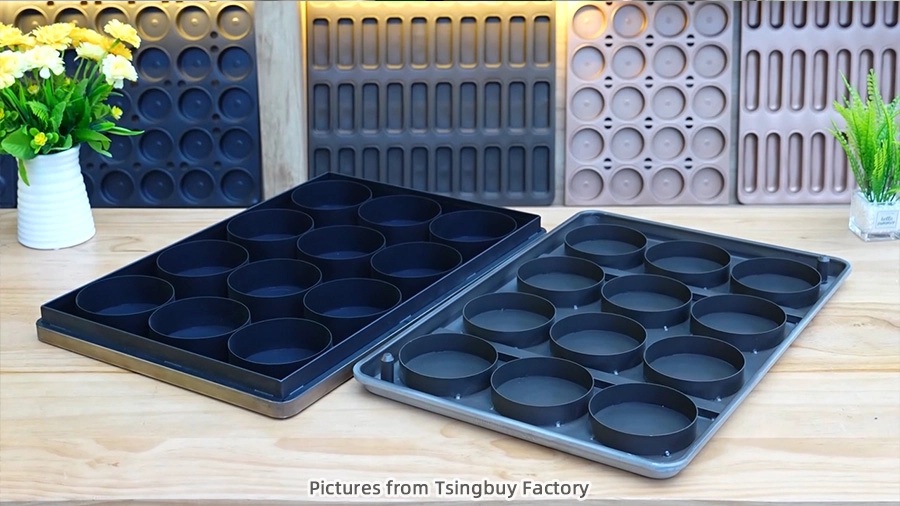
Multi-mold baking pans are commonly used for products such as muffins, buns, cakes, and other individually molded bakery items.
These pans can be customized according to:
- Mold shape and dimensions
- Number of cavities
- Mold arrangement
- Material and coating
- Overall pan size
- Edge and frame structure
For example, an industrial bakery producing egg-shaped cakes may require a multi-mold pan with a specific cavity arrangement and release performance.
Developing the pan according to the product and production line helps ensure that the mold design is suitable for the intended application.
Choosing a reliable custom baking tray supplier in China allows bakeries to develop pan designs that match their product specifications and production equipment. From sheet pans and loaf pans to baguette trays and multi-mold baking pans, customized bakeware can support different baking applications while helping maintain consistent product arrangements and practical handling requirements.
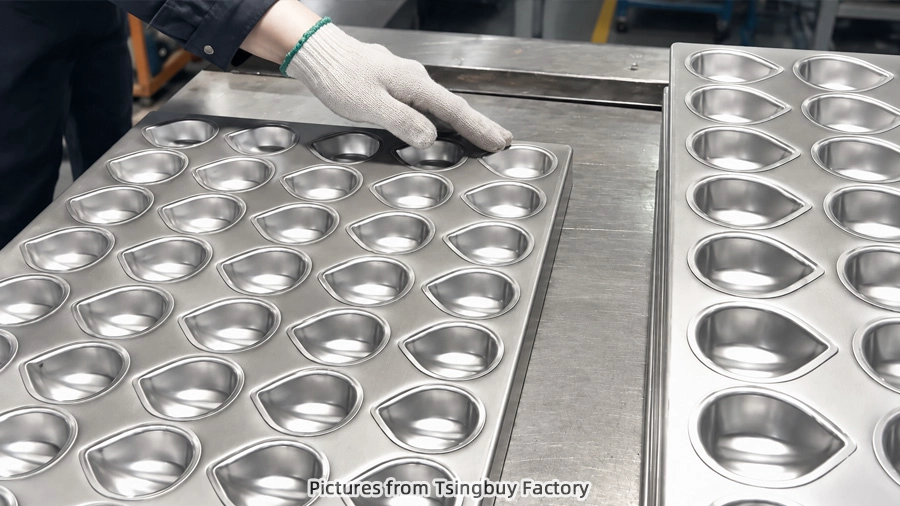
Custom baking pan development involves several technical decisions.
The most effective design is usually the one that meets the bakery's actual production requirements without introducing unnecessary complexity.
Custom Size and Shape
Pan dimensions should be based on the bakery's production equipment and product specifications.
Custom sizes can help match existing ovens, racks, conveyors, and pan handling systems.
Custom Mold Layout
Mold quantity, shape, spacing, and arrangement can be adjusted according to product requirements.
This is particularly important for bakeries producing different products or using automated depositing systems.
Surface and Coating Options
The baking surface should be selected according to the product and baking process.
Smooth, perforated, or corrugated surfaces may be considered for different applications.
Coating selection should also take into account product release, cleaning requirements, and operating conditions.
Edge and Frame Design
Edge construction can influence pan rigidity, handling, stacking, and compatibility with production equipment.
Depending on the application, options may include reverse-folded edges, wire-in-rim structures, reinforced frames, and other customized designs.
OEM and ODM Bakeware Development
For bakery brands, equipment manufacturers, and distributors, OEM and ODM services provide opportunities to develop baking pans according to specific product or market requirements.
A professional bakeware manufacturer can assist with technical drawings, design evaluation, sample development, and customized production.
Tsingbuy has been manufacturing baking pans since 2006, providing commercial and industrial bakeware for bakeries, food factories, wholesalers, distributors, and baking brands.
With manufacturing experience in sheet pans, loaf pans, baguette trays, and multi-mold baking pans, Tsingbuy supports customers with customized bakeware solutions for different production requirements.
As an industrial baking pan manufacturer in China, Tsingbuy offers customization services covering pan dimensions, materials, mold layouts, coatings, surface structures, and edge designs.
The customization process generally includes the following steps:
Step 1: Inquiry and Requirement Communication
Customers provide product information, pan dimensions, production requirements, and application details.
Existing samples, drawings, or reference photos can also help clarify the project.
Step 2: Design and Technical Drawing
The technical team develops or reviews the pan design according to the customer's requirements.
Important details such as dimensions, mold layout, material, coating, and edge structure are confirmed.
Step 3: Technical Review and Tooling
The design is evaluated for manufacturing feasibility and application suitability.
For customized multi-mold pans, mold and tooling development may be required before sample production.
Step 4: Sample Making and Confirmation
Samples are produced for customer evaluation.
Customers can review dimensions, mold structure, surface treatment, and other agreed specifications before confirming the design.
Step 5: Mass Production and Quality Inspection
After sample confirmation, the order proceeds to mass production.
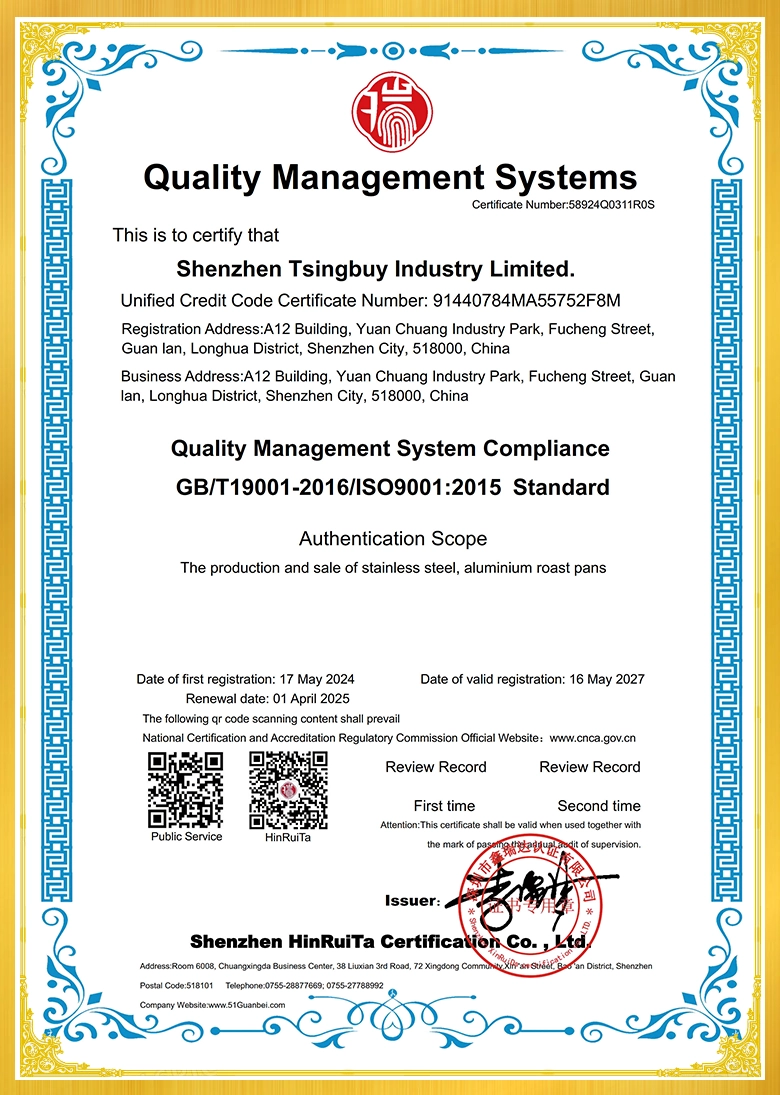
Tsingbuy applies production management and quality inspection procedures to help maintain consistency with the approved specifications.
Step 6: Export Packaging and Shipping
Finished baking pans are prepared for export packaging and shipment according to the order requirements.
For customers looking for a custom baking tray supplier in China, working with an experienced manufacturer helps establish a clear process from initial design to batch production.
As a commercial bakeware factory in China, Tsingbuy provides customized baking pan solutions for industrial bakeries, food factories, baking brands, and distributors. With manufacturing experience since 2006, Tsingbuy supports OEM and ODM projects through technical drawing, mold development, sample confirmation, mass production, and quality inspection, helping customers turn their bakeware requirements into practical production solutions.
Changeover efficiency is an important consideration for industrial bakeries producing multiple products on the same production line.
While baking pans cannot eliminate every changeover activity, suitable pan design can help reduce avoidable compatibility issues, simplify handling, and support more flexible production planning.
By matching pan dimensions, mold layouts, materials, coatings, and edge structures to the actual production process, bakeries can develop bakeware that better supports their operational needs.
For industrial bakeries, food factories, and baking brands, custom bakeware is not simply a product specification. It is part of the overall production solution.
Tsingbuy provides customized commercial and industrial baking pans designed according to customer requirements, helping bakery businesses develop practical bakeware solutions for their production lines.
Looking for customized baking pans for your production line?
Contact Tsingbuy to discuss your product requirements and start your custom bakeware project.
As a commercial bakeware factory in China, Tsingbuy supports OEM and ODM projects for industrial bakeries, food manufacturers, and baking brands worldwide.